Client:
BJ's Wholesale Club
Industry:
Retail
Moving Design Upstream
From Order-Takers to Strategic Partners:
A 2-Year DesignOps Roadmap
Impact Snapshot:
3-6 Months Lead Time UX Ahead of Development
20% Faster Research Synthesis via Enterprise AI Integration
Value-Led Discovery Pivoting from feature delivery to solving the right user problems

Situation
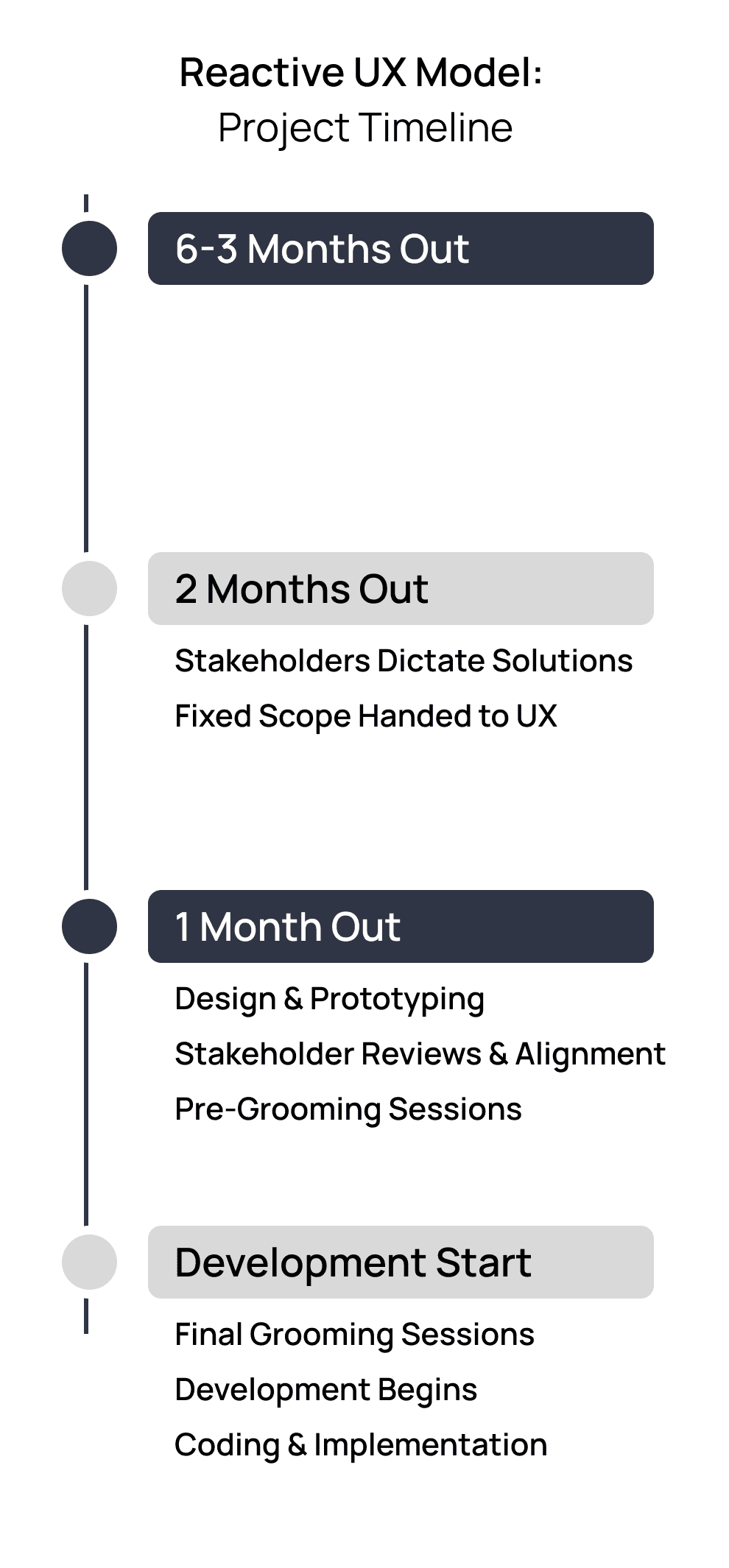
BJ's design organization functioned as a reactive service desk. Stakeholders dictated solutions before UX involvement, forcing the team into pixel-pushing against tight engineering deadlines with no runway for validation or strategy.
Task
Lead a multi-year organizational transformation. My mandate: re-architect our DesignOps to move UX engagement 3-6 months ahead of engineering, ensuring every design decision was anchored in validated insights rather than business assumptions.
Action
I led a multi-phase organizational transformation centered on:
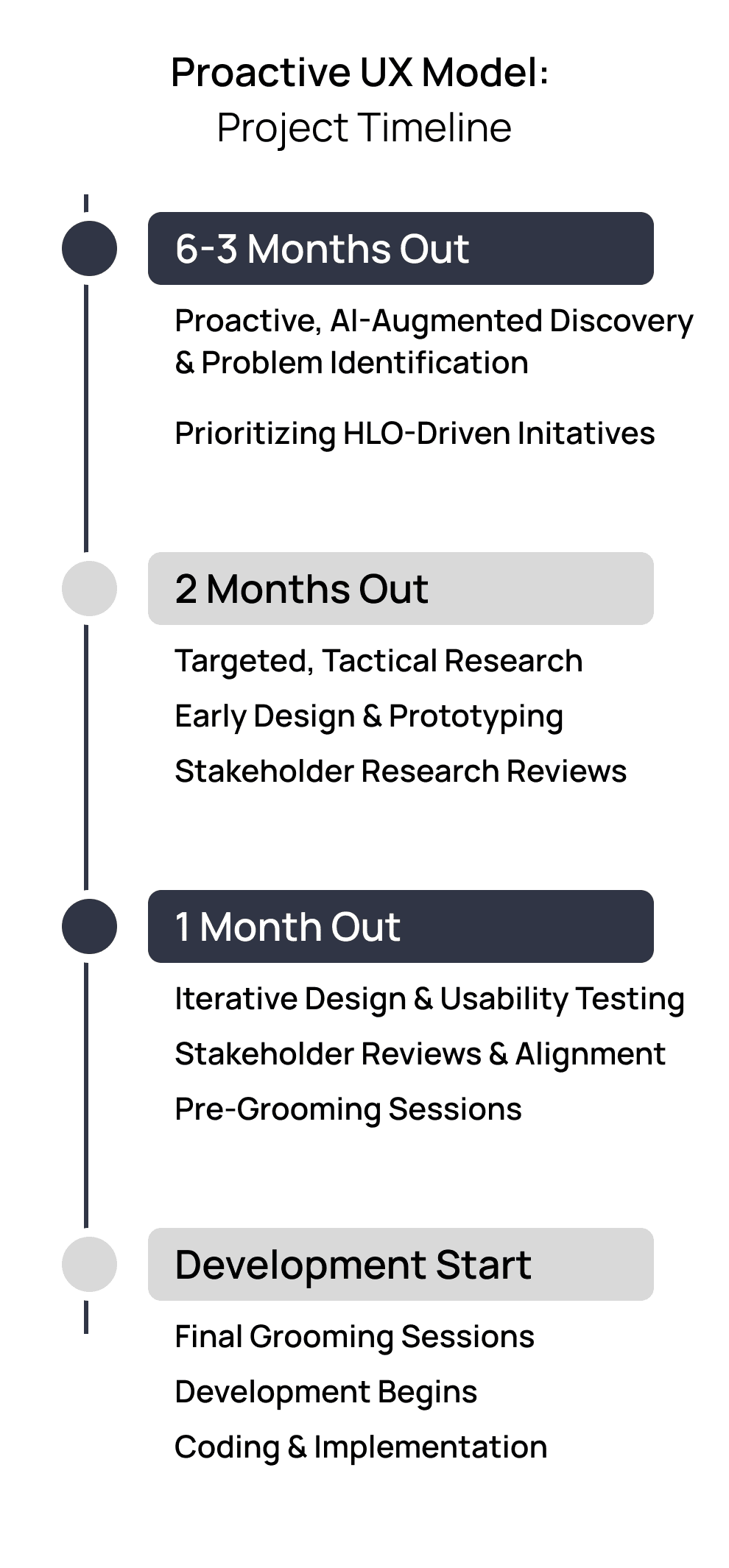
Shifting the Entry Point: Pivoted the team from "designing to a solution" to "designing for a problem." By partnering with product leadership early, I established UX as the lead in identifying real member friction points before project scope was locked in.
Standardized Proactive Discovery (AI-Augmented): Implemented a rigorous discovery framework utilizing competitive audits and member surveys. By integrating enterprise AI tools (LogRocket AI, UserTesting, and Microsoft Copilot), I reduced raw research and analysis time by 20%. This gave the team precious time back to focus on pattern recognition and strategic storytelling.
Radical Transparency: Democratized the process by integrating stakeholders directly into research. Cross-functional partners became "co-owners" of the data, ensuring organization-wide buy-in while we maintained strategic autonomy over the research strategy.
Tethering Design to HLOs: Aligned every research insight with BJ's Company-Wide High-Level Objectives (HLOs). This reframed UX from a "nice-to-have" execution arm into a primary engine for smart product strategy and business growth.
Results
After two years of persistent process engineering, we established a true Proactive Delivery Model. UX now operates 3 to 6 months ahead of development, ensuring we are building the right features the first time and yielding a significant reduction in post-launch technical debt.
I architected a two-year transformation that evolved our UX department from a reactive service desk into a proactive strategic engine. By institutionalizing a data-driven DesignOps roadmap, I ensured design leads engineering by at least one quarter, directly translating validated insights into company-wide strategic impact.