Client:
BJ's Wholesale Club
Industry:
Retail
Architecting Agility
From Siloed Operations to Unified Strategy:
Re-Architecting UX for Omnichannel Scale
Impact Snapshot:
60% Increase in Operational Capacity
$360k Annual Cost Savings
5 Critical Product Domains Managed

Situation
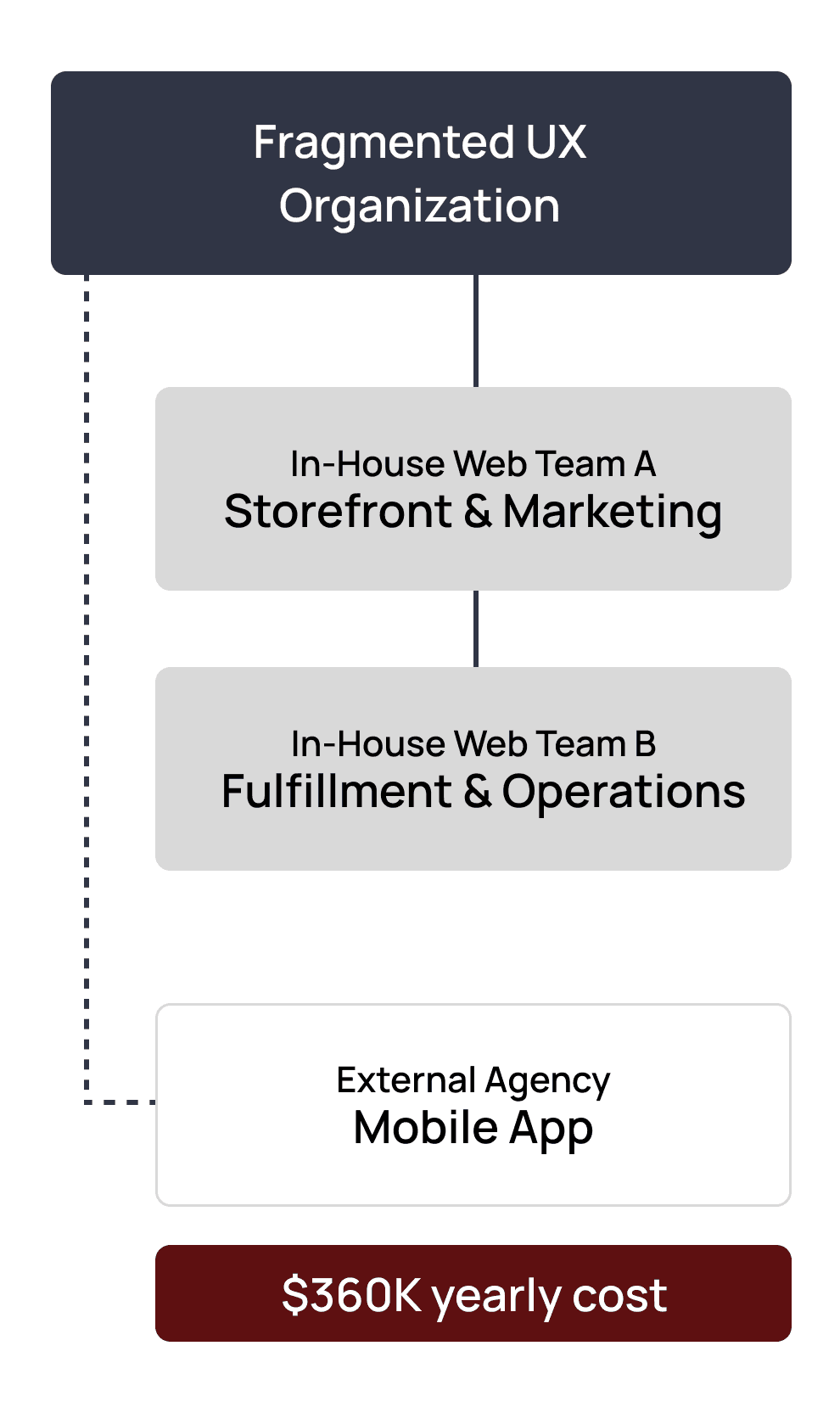
The BJ's UX department was historically fragmented into two siloed units each reporting to different managers, while the mobile app, which drives the majority of e-commerce revenue, was managed by an external agency.
Operating without a centralized intake or governance model, stakeholders and product managers funneled requests directly to individual designers. This created a chaotic environment of conflicting deadlines, duplicate efforts, and execution-only tasks that bypassed critical research and discovery. Without a gatekeeper to evaluate bandwidth or align requests with company-wide high-level objectives (HLOs), the team was highly reactive.
Task
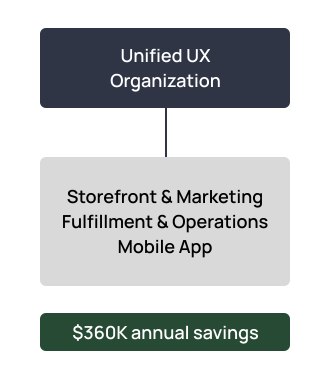
Consolidate the UX organization into a unified front, establish a strict governance and intake model, and lead the transition of the mobile app UX from agency-managed to fully in-house. The objective was to eliminate reactive execution, reclaim control over the end-to-end user journey, and align all research and design efforts directly with company-wide HLOs.
Action
I lead a multi-phase organizational transformation centered on:
Unifying the Design Front: When a vacancy opened in Product, I absorbed the Fulfillment / Operations UX designer into my team. This eliminated the siloed "two-team" model, creating a unified UX organization.
Transitioning the Mobile App In-House: By bringing design under our roof, we eliminated the friction of separate agency research and design teams, allowing us to conduct cohesive discovery and protect team bandwidth.
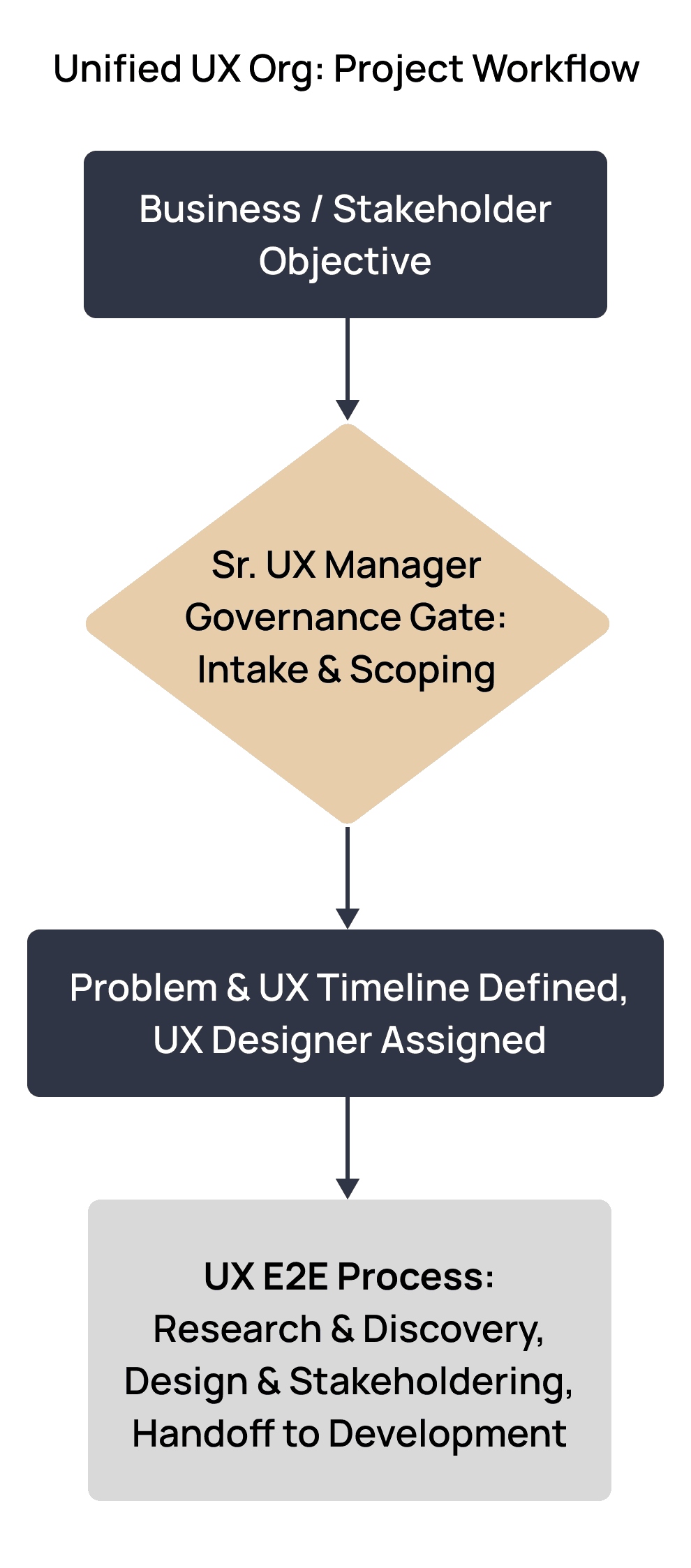
Establishing DesignOps Governance: To protect the team from direct, unvetted stakeholder requests, I implemented a centralized intake process. This allowed me to act as a gatekeeper to evaluate team bandwidth and ensure incoming work actively laddered up to our top business objectives.
The "Initiative-Based" Staffing Model: To handle an increased workload with a small team, I moved away from "Pod-based" assignments. I transitioned designers to own initiatives end-to-end, ensuring they were responsible for research and design across all Pods touched by their project to maintain cross-platform cohesion.
Resource Optimization: This shift allowed my team of five to successfully manage design across the App, Web, Club Operations, Fulfillment, and Membership domains simultaneously without burnout or conflicting cross-functional deadlines..
Results
This re-architecture increased our team's workload capacity by 60% and saved $360k in annual agency spend.
Beyond the metrics, it established a cohesive omnichannel experience for 8M+ members and empowered a lean team to drive major product roadmaps with total autonomy.
I unified a fragmented, agency-dependent UX department into a single, in-house powerhouse. By implementing an initiative-based staffing model, I empowered a team of five to own the end-to-end journey - slashing $360k in annual costs while increasing workload capacity by 60%.
